· 15 min read
Seven Hours for Seven Years - Freedom for the El Hiblu 3
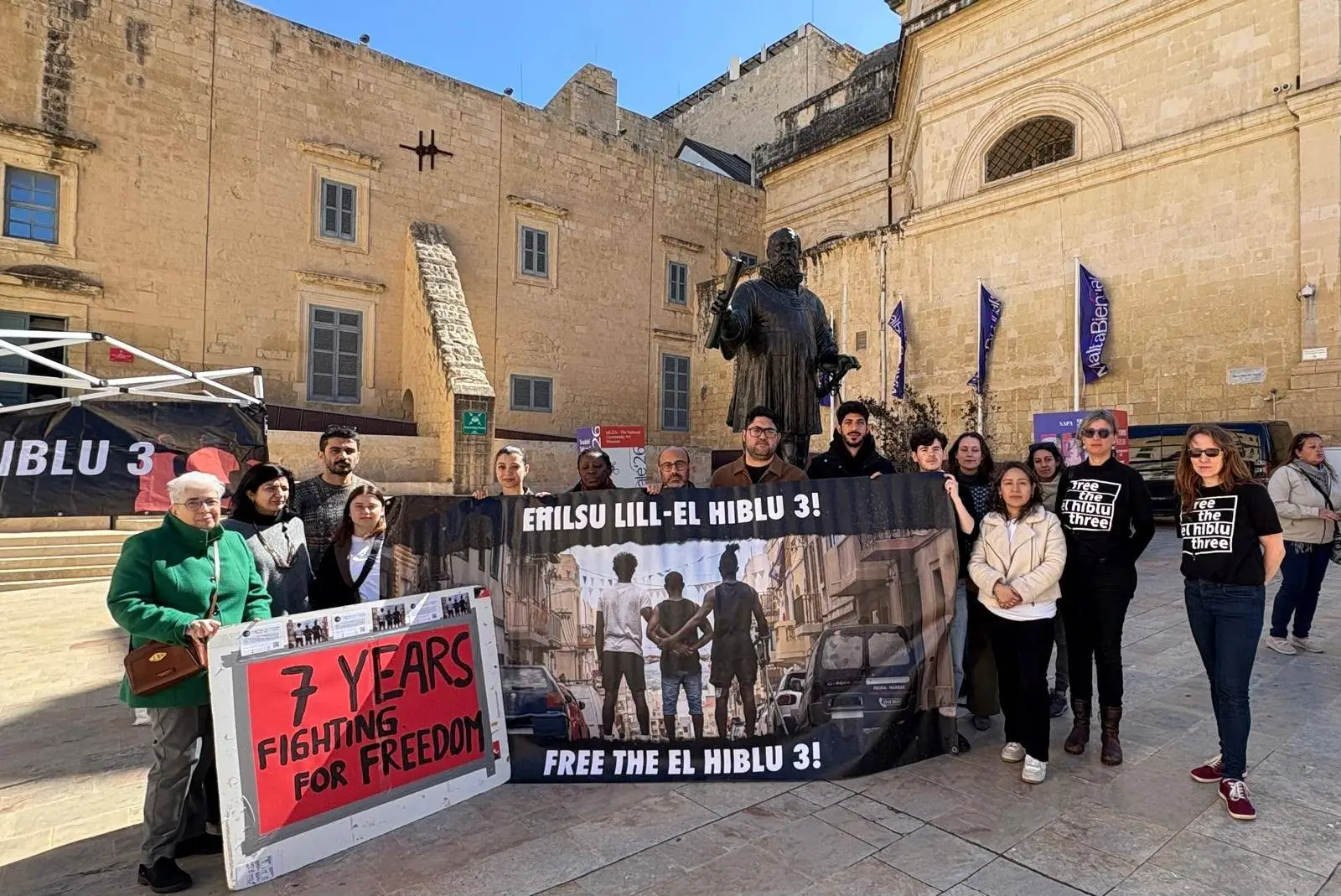
On Saturday 28th March 2026, we marked the 7th anniversary from the unjust arrest of the three young men, now known as the El Hiblu 3. Abdalla, Amara and Kader arrived in Malta were rescued from a sinking rubber boat in the middle of the Mediterranean Sea. They were just 15, 16 and 19 years old. The three boys played a role in calming a potentially tragic situation, when some people were about to jump overboard to certain death, by translating and assisting in the communication between the captain and crew, and the rest of the migrants.
Since then, for already seven years, the El Hiblu 3 have been criminalized and unjustly accused of having committed multiple crimes – with some charges that could carry life sentences. 2,557 days of life in a criminalized limbo.
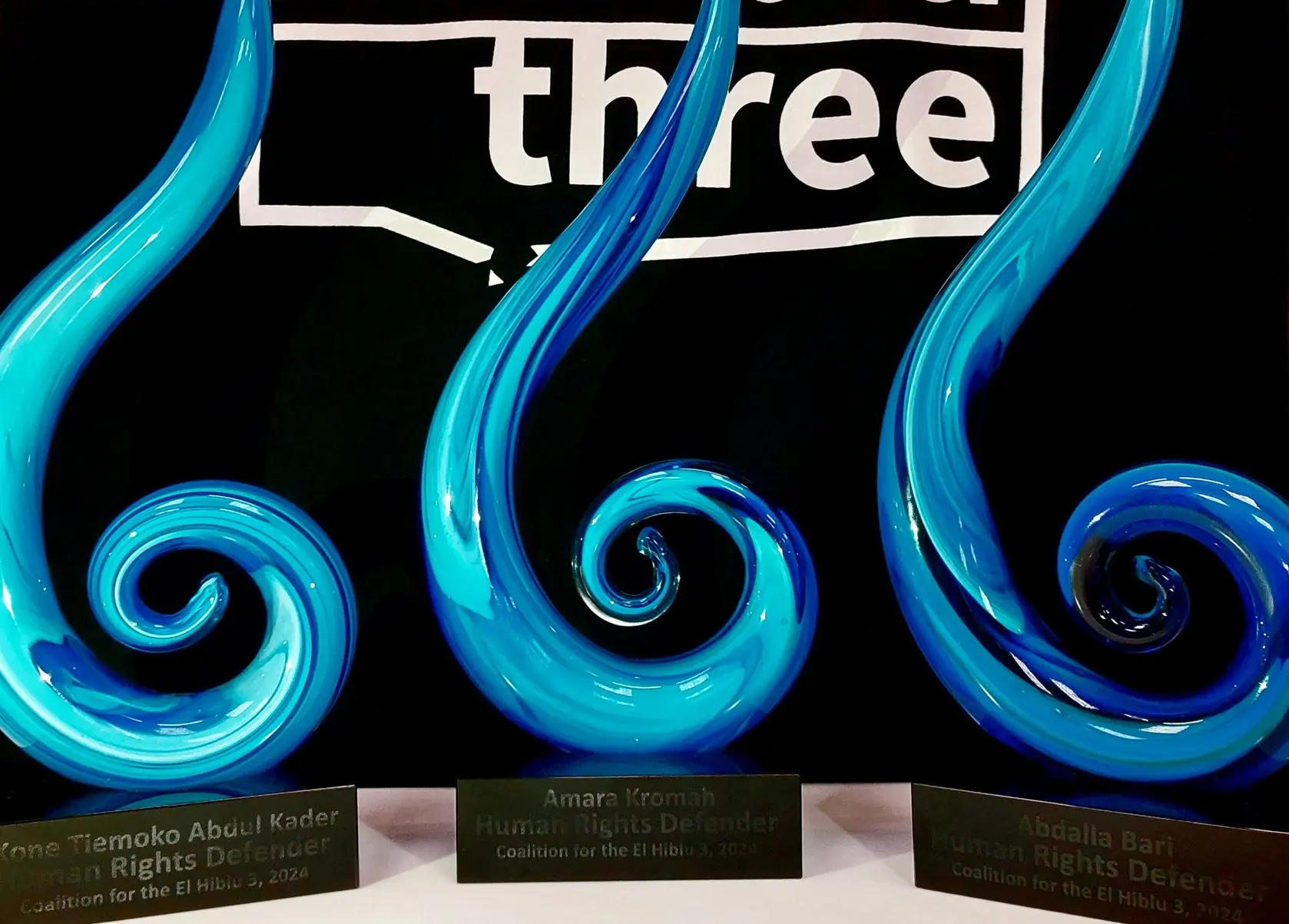
As a Coalition made up of many local and international NGOs and individuals, we continue to show our solidarity with the three young men, whom we celebrate as Human Rights Defenders who, in the face of a threat of an illegal pushback to Libya, showed incredible bravery as mediators and translators.
As a Coalition, we reiterate our call to the authorities to end this injustice and Drop the Charges!
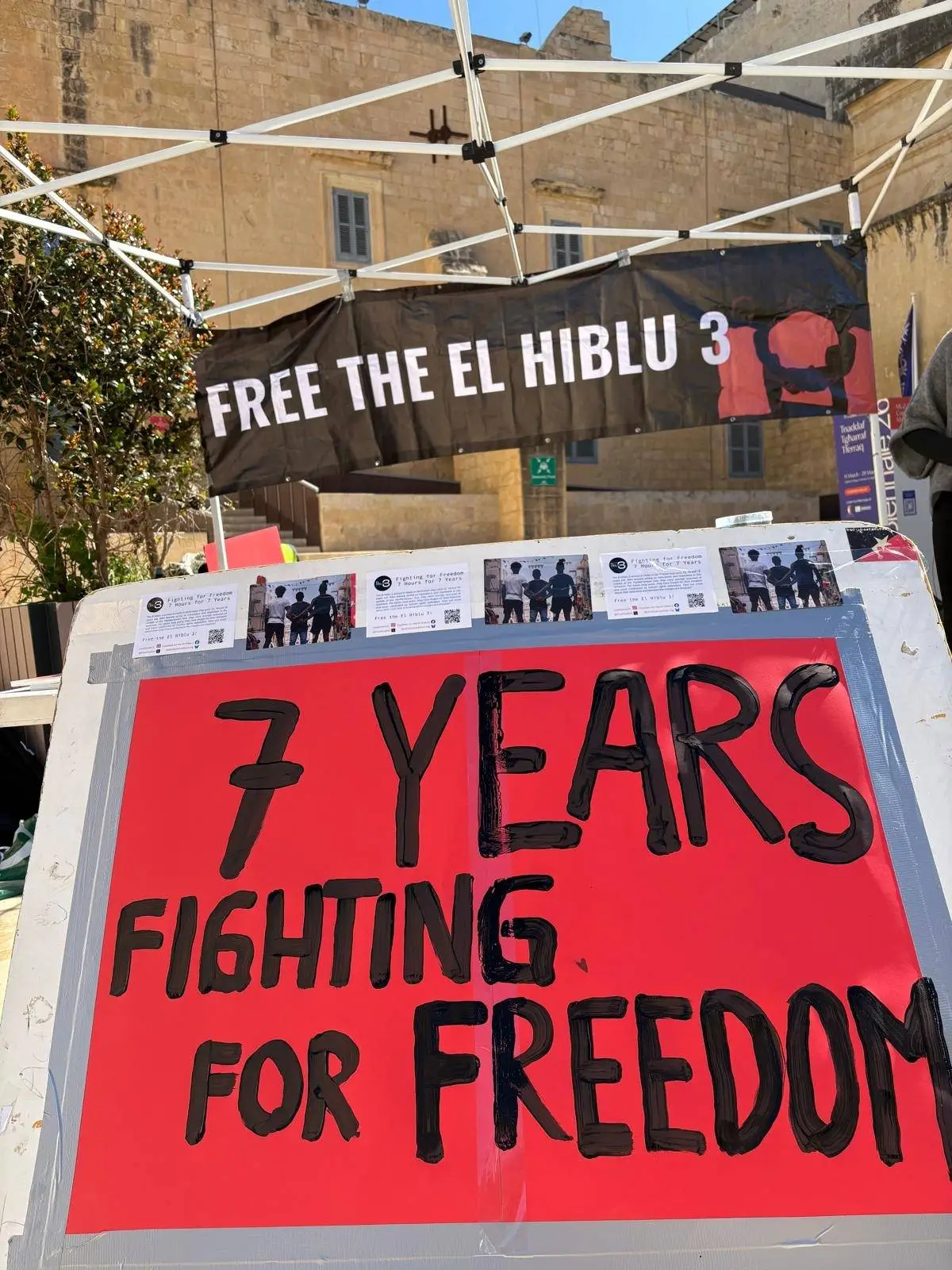
During our seven-hour protest, we condemned the ongoing injustice and celebrate the El Hiblu 3. Every hour, and therefore every year, we marked with different activities to raise awareness about themes related to this case:
- Criminalization of refugees and migrants arriving in Europe;
- Illegal pushbacks in the Central Mediterranean;
- EU externalization policies with a particular view on the deals with Libya and Tunisia;
- Racism and social exclusion;
- Policies of non-assistance at sea for people in need of rescue and the role of the civil fleet;
- Transnational networking and resistance against the EU border regime.
Programme
09:00 Arrival
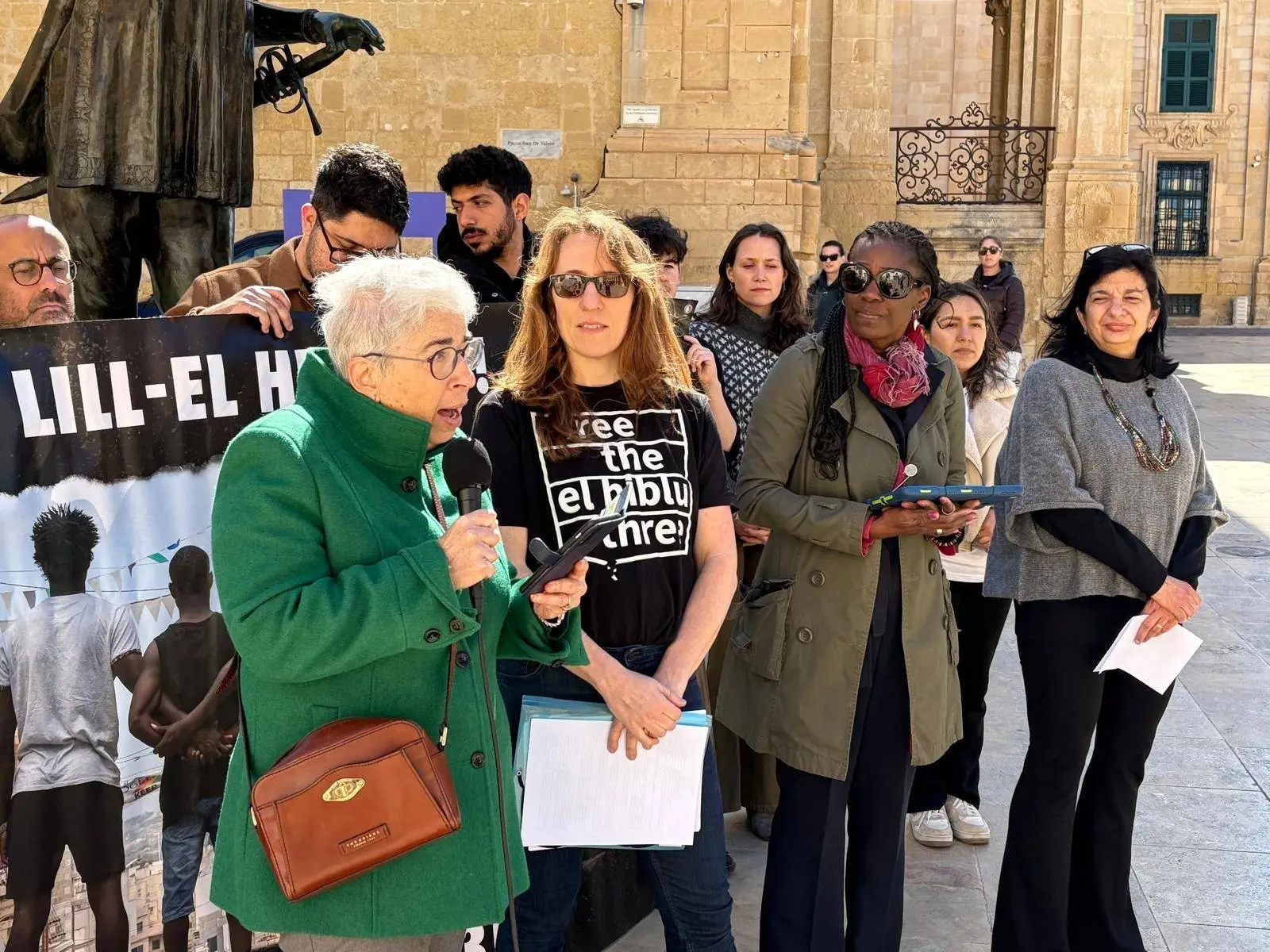
12:00 Non-Assistance and Pushbacks at Sea (Daniel Mainwaring, Ċetta Mainwaring, Kirstin Sonne, Malta Migration Archive)
13:00 Moviment Graffitti Drum Circle
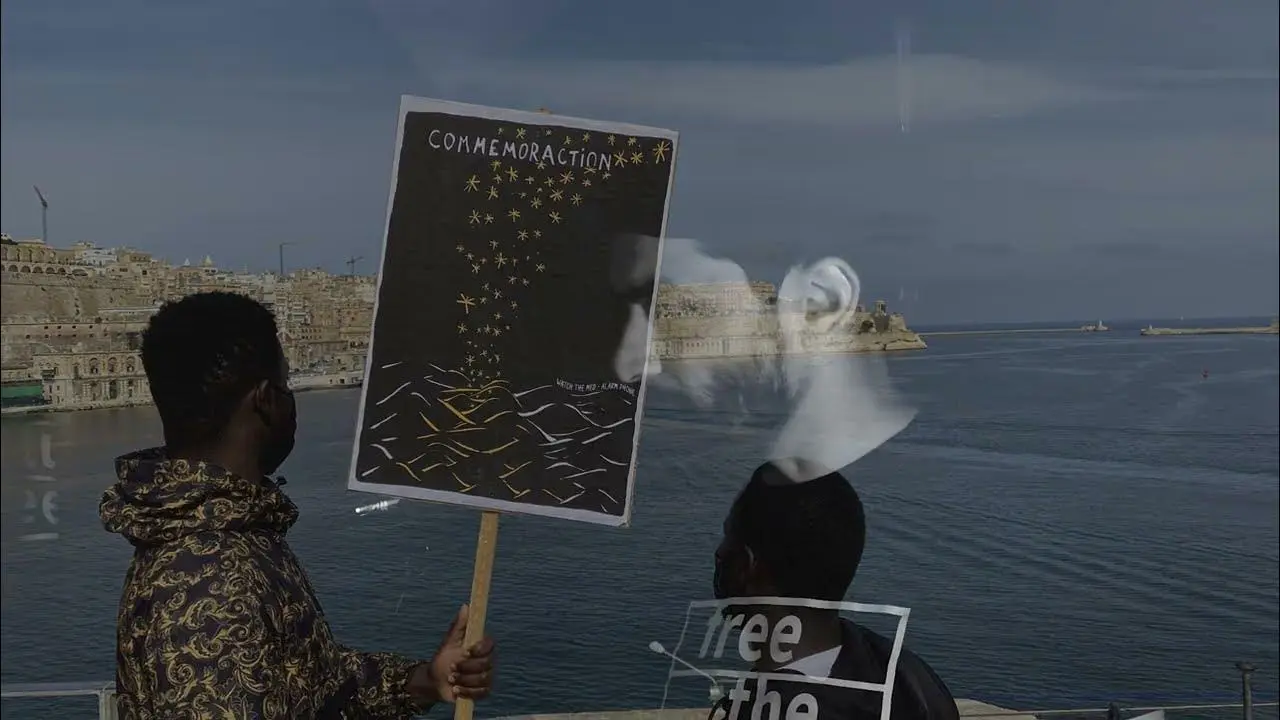
14:00 Stop the Pushbacks to Torture Camps in Libya! Hagen Kopp (AlarmPhone) and David Yambio (Refugees in Libya)
15:00 Ballad of the El Hiblu 3, Gabriel Schembri and Francesco Frendo
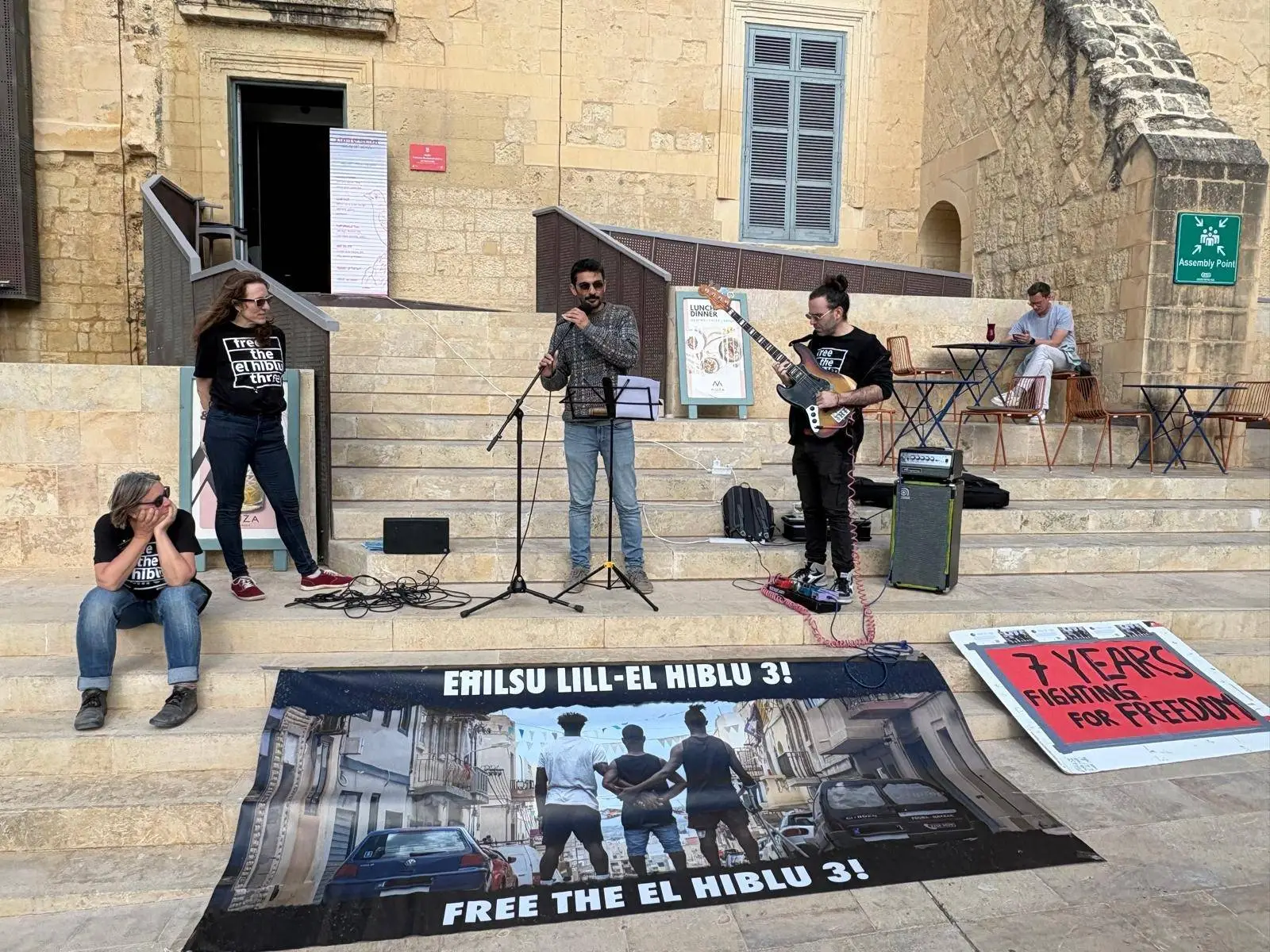
Speech and introduction – Dr Ċetta Mainwaring, Coalition for the El Hiblu 3
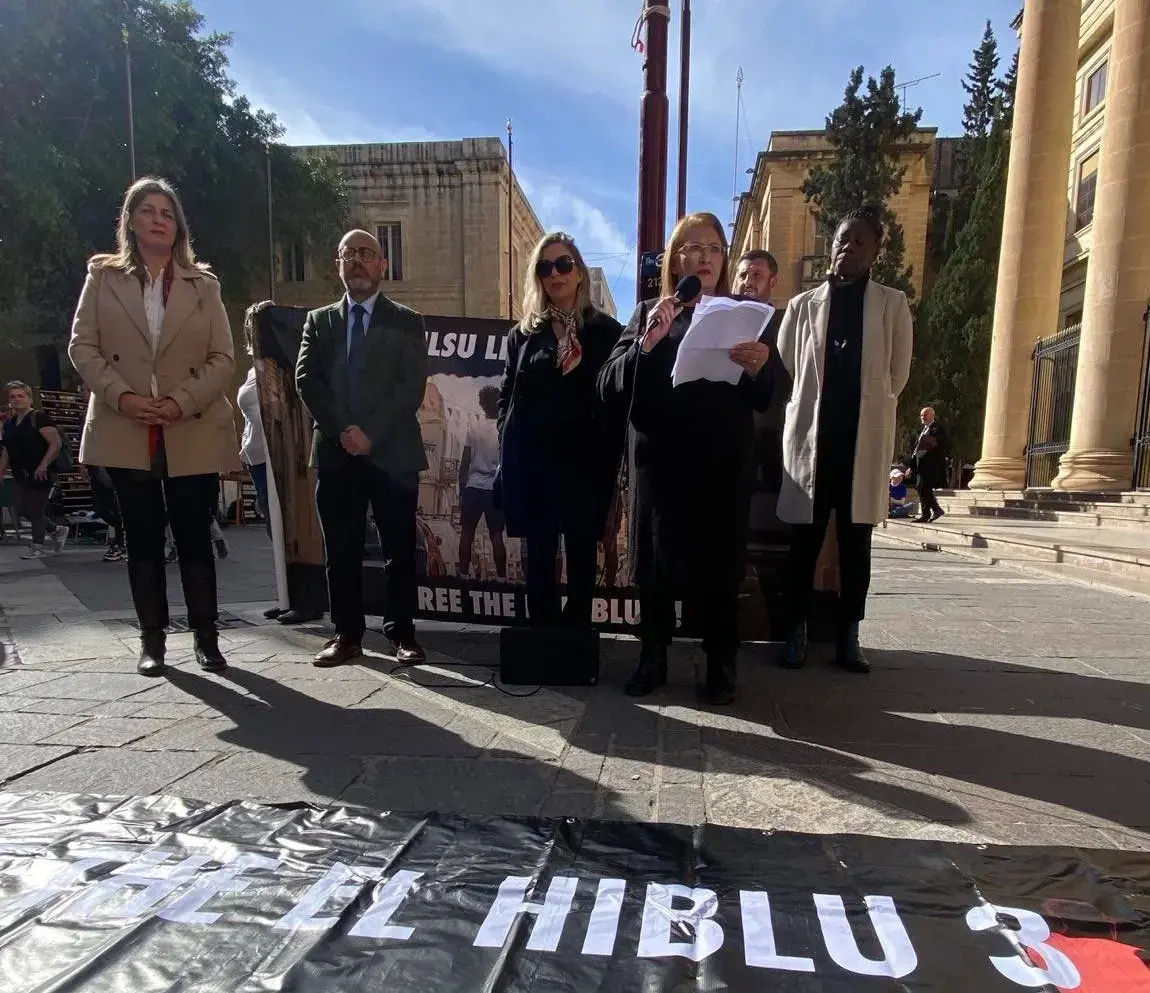
Hello everyone, my name is Ċetta Mainwaring and I am here representing the Coalition for the El Hiblu 3 to mark the 7th year since Amara, Abdalla and Kader arrived in Malta. I’m delighted to be joined by friends and allies today at this press conference but also throughout the day as we mark every year over seven hours.
Seven years ago on 28th March 2019, Amara, Abdalla and Kader arrived in Malta, alongside 100 other travellers. They were not yet known as the El Hiblu 3 and they had just spent days at sea after fleeing Libya on a rubber boat. They had escaped violence and torture in Libya, they had faced death when their rubber boat began to sink in the middle of the Mediterranean Sea, and they had been threatened with being forcibly returned to that same violence in Libya even after being rescued by an oil tanker.
Despite these challenges, despite only being 15, 16 and 19 years old, they acted as translators and mediators between the crew and their fellow passengers to restore calm during a volatile situation at sea. Their bravery in this moment helped prevent an illegal pushback to Libya.
Already painted as terrorists and pirates by the media before they even arrived in Malta, they were immediately arrested upon arrival and accused of multiple crimes, including terrorism, charges that could carry life sentences.
Since 2019, they have continued to endure this form of criminalization by the Maltese authorities. They have been denied any justice. For 2,556 days, their freedom has been denied, robbing them of their youth and their futures.
Today, Saturday 28th March 2026, we mark the 7th anniversary of the wrongful arrest of three human rights defenders, our friends Abdalla, Amara and Kader.
As a Coalition made up of many local and international organisations and individuals, we continue to stand in solidarity with the three young men, whom we celebrate as Human Rights Defenders. In the face of an illegal pushback to Libya, Abdalla, Amara and Kader showed incredible bravery as mediators and translators.
As a Coalition, we reiterate our call to the authorities to end this injustice and drop the charges! We join a chorus of international NGOs, among which are various United Nations bodies who, most recently, this January 2026 urged Malta to end the unjustified prosecution of the El Hiblu 3.
During our seven-hour vigil today we will condemn the ongoing injustice and celebrate the El Hiblu 3. Every hour, and therefore every year, will be marked with different activities to raise awareness about issues related to this case, including the
- Criminalization of refugees and migrants arriving in Europe;
- Illegal pushbacks in the Central Mediterranean;
- EU externalization policies to Libya and Tunisia;
- Racism and social exclusion in Malta;
- Abandonment of people in distress at sea and the role of the civil fleet; and
- Transnational resistance against the EU border regime.
I’m delighted now to be joined by allies and friends for this press conference.
Prof. Vicki-Ann Cremonai an academic, activist, and former ambassador. She is the president of Repubblika an NGO dedicated to preserving the rule of law. She has been a constant supporter of the three boys.
Ms Regine Nguini is a journalist and director and founder of African Media Association Malta, and a long time ally of the El Hiblu 3. In her work, she tirelessly speaks truth to power with her clarion call for a more just world.
Dr Katrine Camilleri is a lawyer and director of Jesuit Refugee Service Malta. She has long championed the rights of migrants and refugees, and has received numerous awards in recognition of her work, including the the UNHCR Nansen Refugee Award. JRS have repeatedly shown their solidarity with the boys.
Speech from Prof. Vicki-Ann Cremona, President, Repubblika
We are here today because this case raises a question that goes to the heart of what the rule of law means in practice.
Not in theory. Not in textbooks. But here, in Malta, in the decisions taken by our institutions.
Seven years ago, three young people found themselves in a moment of fear and confusion on a vessel in the Mediterranean. They acted as intermediaries. They helped communicate. They helped prevent escalation.
For this, they were arrested. For this, they have been prosecuted. For this, they still face charges of terrorism.
Repubblika has always insisted that the rule of law is not only about enforcing laws. It is about applying them with judgment, with proportionality, and with respect for fundamental rights.
And it is precisely here that this case raises profound concern. Anti-terrorism laws are among the most serious instruments available to the State. They are designed to address acts of violence intended to spread fear and undermine society. To apply them in circumstances such as these risks distorting their purpose and weakening their legitimacy.
But there is another dimension that cannot be ignored. This case has now been ongoing for seven years. Seven years of uncertainty. Seven years in which these young men have lived under the weight of serious criminal charges, without resolution.
Justice delayed to this extent is not neutral. It is not procedural. It is itself a form of injustice. The European tradition of justice, to which Malta belongs, is not blind to time. It recognises that proceedings must be conducted within a reasonable time, and that the burden placed on individuals by the criminal process must be proportionate and justified.
That standard is not being met here. The continued pursuit of these charges, in these circumstances, raises serious questions about proportionality, about fairness, and about the responsible use of prosecutorial discretion.
We say this with full respect for the institutions involved. But respect for institutions also requires that we speak when their actions risk undermining the very principles they are meant to uphold.
The Attorney General has the authority to reassess this case. And with that authority comes responsibility. Responsibility to ensure that the law is not used in a way that is excessive. Responsibility to ensure that justice is not reduced to process alone. Responsibility to ensure that the criminal law retains its moral credibility.
This is not a question of weakening the law. It is a question of preserving it.
We therefore renew our appeal: That these proceedings be brought to an end. That proportionality be restored. And that the law be exercised not only with firmness, but with the humanity that gives it meaning.
Speech from Ms Regine Nguini, Director, African Media Association Malta
Speaking about racism is exhausting. Our good friends tell us to get over it. And we try. Still, we are tired, because it is still, and always, there, hanging above our heads like the Sword of Damocles. We see the same patterns again and again, patterns that have been normalised.
For example, what is normal about a white footballer covering his mouth with his shirt to safely -I would say cowardly- racially abuse the Brazilian Vinícius? And when Vinícius complained, you know what happened. Opinions were divided: one side supported him, the other sided with the football player whose name I choose not to remember.
Vinícius has no reason to invent such a story, yet someone as powerful as Mourinho chose to dismiss it as irrelevant.
Racism in the media, racism in sport, racism in schools, racism in hospitals. All of this has paved the way for racism even in our institutions.
The way politicians talk about racialised people is highly problematic. On Thursday, the Minister for Home Affairs posted on his Facebook account a photo of a Black person being arrested by two police officers. The caption read: “We will send back any foreigner who doesn’t collaborate, even if they have spent 15 years here.”
There was no explanation of what “collaboration” means, but that Black person was exposed there, mobbed by a cyber crowd of racists. That is how stories without context are channelled, and some people are immediately seen as a problem before they are even seen as human.
And I think many of us here feel it, even if we don’t always have the words for it. We hear it in conversations, in racist jokes. We see it in the media. We feel it in the silence, when something unjust happens and no one reacts.
And that silence is part of the problem.
People -I mean real human beings- are easily reduced to labels: Illegal. threat. As if their lives, their stories, everything they’ve been through, doesn’t matter.
But people are neither categories, nor headlines. People are human beings.
And yet, again and again, we see people who have already gone through so much - violence, danger, loss - arriving here and being treated with suspicion instead of dignity.
Some are in their seventh year of one of the most unjust court cases in the history of Malta: the El Hiblu case.
Seven years of fear, of anguish, of broken hopes. Seven years hoping that the case will be dismissed because, when we look closely at it, there is simply no case.
Some people will say that it’s complicated. But honestly, it is not complicated.
It is not complicated to treat people with dignity and to recognise someone’s humanity. It is not complicated to refuse injustice.
What is complicated is the system that keeps justifying why some people deserve less.
And we shouldn’t accept that.
That’s why being here matters. Because showing up means refusing that silence. It means saying: we see what is happening, and we are not okay with it. Not quietly. Not privately. But publicly.
So I’m not here to speak for anyone. I’m here to stand with and to say, clearly:
No more reducing human beings to labels and categories. No more injustice that we are expected to ignore. No more criminalising people for surviving.
Speech from Dr Katrine Camilleri, Director, Jesuit Refugee Service Malta
We are gathered here today to mark the 7th anniversary of the day Amara, Abdalla, and Kader arrived in Malta, and were arrested on terrorism charges. Their crime: mediating between the crew of the El Hiblu and the hundred plus panicked migrants on board, who were pleading not to be returned to be Libya.
In 2019 there was ample evidence that Libya was not a safe place for migrants and asylum seekers. Amnesty International described how refugees and migrants in Libya were trapped in a cycle of serious human rights violations and abuses including prolonged arbitrary detention, torture and other ill-treatment, unlawful killings, rape and other sexual violence, forced labour and exploitation at the hands of state and non-state actors in a climate of near-total impunity. Human Rights Watch too reported widespread use of detention in inhumane conditions, including beatings, sexual violence, extortion, forced labor, and inadequate medical treatment, food and water.
No wonder they did not want to return there.
Today, not much has changed. Just last month, the United Nations Support Mission in Libya and the Office of the High Commissioner for Human Rights issued a scathing report that detailed how systematic and widespread human rights violations and abuses against migrants, asylum seekers, and refugees, perpetrated by traffickers, smugglers, armed groups, and State-affiliated actors involved in migration and border management, persist with impunity.
Yet states, our own included, persist in pursuing agreements with Libya aimed at ensuring that asylum seekers do not leave Libya or that, if they do, they are intercepted and returned there, regardless of the consequences for them.
And sadly, this is not the only example. Today, we live in a world where states go to ever greater lengths to evade their freely assumed obligations to protect the life, liberty, safety, and dignity of men, women and children seeking protection.
Not only this. They also use their power to intimidate or even punish those who dare stand against abuse of power and human rights violations, even if they are using the remedies that the law gives them.
In a world where human rights abuses are far from the exception, and where they happen in places which are out of the sight and reach of the people and institutions who would traditionally be described as human rights defenders – out at sea, at land borders or in detention centres – were it not for the actions of individuals like Amara, Abdalla, and Kader, human rights law would be worth little more than the paper it is written on.
Today, therefore, we are here to recognise the contribution of those who, like Amara, Abdalla, and Kader, refuse to give in to fear and do the right thing. We stand in solidarity with them, as they face this injustice and promise them our support, and we commit to follow their example, by standing for human rights, as they did.
We join our voices to the many that are calling on the Malta to drop the charges against the El Hiblu 3, most recently the UN Special Rapporteurs on the Human Rights of Migrants and on the Promotion and Protection of Human Rights while Countering Terrorism, who on 23 January 2026 urged Malta to end the unjustified prosecution of the El Hiblu 3.
Speech from David Yambio, Refugees in Libya
Today, on the 7th anniversary of the injustice suffered by Abdalla, Amara, and Khader — the El-Hiblu 3 – I, together with the entire team of Refugees in Libya, send our strongest solidarity and closeness to them.
For seven years, they have been fighting a battle for freedom that should never have had to be fought on European soil. On European soil —a soil of an alleged democracy, rule of law and civility. For years, we have commended El-Hiblu 3 for their courage, bravery, and the act of human rights defense they carried out to prevent an illegal refoulement to Libya — a country we, migrants, refugees, and stateless people, know too well for the price it has cost us: our dreams, our bodies , torture, rape, enslavement, and death.
Libya was already declared unsafe at the time of the El-Hiblu incident in 2019 — unsafe not only for disembarking shipwreck survivors like Abdalla, Amara, and Khader, but also for those living in Libya.
In 2023, the United Nations Independent Fact-Finding Mission on Libya declared that crimes against humanity were being committed against migrants, refugees, and asylum seekers. On 17 February 2026, the Office of the High Commissioner for Human Rights (OHCHR) and the United Nations Support Mission in Libya (UNSMIL) released yet another report reiterating that Libya is unsafe and that crimes against humanity against migrants, refugees, and asylum seekers continue with great impunity.
As we speak, the International Criminal Court has in its custody a Libyan individual accused of committing crimes against humanity against Libyans, migrants, refugees, and asylum seekers. In light of all this evidence, it is our hope that the Maltese authorities and judicial system will deliver immediate justice and free the El-Hiblu 3. They have been wronged and accused of terrorism for saving themselves from torture and enslavement.
For us, and for many around the world, you are heroes. You are true human rights defenders. We say now: seven years are enough and we can only thank you for fighting still. This nightmare must come to an end because we truly believe and know that you are all innocent of the allegations and charges placed against you.
Thank you for doing the right thing.